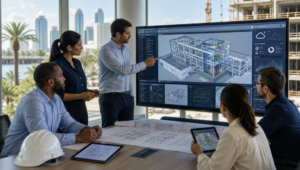
Technology has changed the way construction projects are planned, coordinated, reviewed, and delivered. For companies working in architecture, engineering, construction, development, facility management, and infrastructure, IT is no longer just a support department that keeps computers running. It has become one of the driving forces behind smarter project delivery, stronger communication, cleaner documentation, and better decision-making from the earliest design stages through final construction.
That is especially true when it comes to Building Information Modeling, commonly known as BIM. BIM depends on digital coordination, cloud collaboration, secure file sharing, accurate modeling software, data management, and connected workflows. Without strong IT systems behind it, even the most detailed model can become difficult to manage, share, protect, or update. With the right IT support, however, BIM becomes more than a 3D model. It becomes a central source of truth that helps teams reduce confusion, catch problems earlier, and keep projects moving with more confidence.
For construction teams in Central Florida, Orlando BIM Services are becoming increasingly valuable because Orlando continues to grow as a hub for development, tourism, healthcare, education, aerospace, and technology. As Florida’s technology economy expands, with resources like the Florida High Tech Corridor highlighting innovation across the region, construction teams have more reasons than ever to bring IT and BIM together in a practical, forward-thinking way.
IT Gives BIM the Digital Foundation It Needs
BIM is built on information. Every wall, beam, duct, pipe, ceiling height, equipment location, material detail, and project update can become part of a coordinated digital environment. That level of detail requires dependable technology infrastructure. IT helps provide the hardware, software, cloud systems, cybersecurity, backups, user permissions, and connectivity that keep BIM workflows stable.
When IT is weak, BIM can become frustrating. Large files may load slowly. Team members may work from outdated versions. Software may not integrate properly. Field crews may struggle to access drawings on mobile devices. Project managers may lose time hunting through disconnected folders or email threads. These small issues can create real delays when multiple trades, consultants, and stakeholders are trying to coordinate around the same project.
Strong IT systems help prevent those problems. They allow BIM teams to work from organized cloud platforms, access updated files quickly, and collaborate across offices, job sites, and consultant teams. This matters in Orlando because many projects involve fast-moving timelines, multiple stakeholders, and facilities that must serve people safely and efficiently. From healthcare expansions to hospitality improvements, IT-backed BIM helps teams stay aligned.
The broader role of information technology continues to grow because businesses rely on digital systems to store, process, transmit, and protect important information. In construction, that information is not just administrative. It is directly tied to project accuracy, cost control, safety, scheduling, and long-term building performance.
Cloud Collaboration Helps Teams Stay Connected
One of the biggest ways IT supports BIM is through cloud-based collaboration. Construction projects rarely happen in one room with one team. Architects, engineers, contractors, subcontractors, owners, facility managers, and consultants may all need access to the same project information. Cloud platforms make that possible when they are set up correctly.
With cloud collaboration, BIM models, drawings, revisions, clash reports, RFIs, and project documents can be accessed by approved users from different locations. This helps reduce the back-and-forth that often slows construction communication. Instead of sending large files through email or wondering which version is current, project teams can work from a shared environment where updates are easier to track.
IT plays a major role in making those platforms reliable. It helps determine who has access, how files are organized, how data is backed up, how permissions are controlled, and how teams can use the platform without confusion. A strong IT setup also helps protect sensitive project data from being lost, corrupted, or accessed by the wrong people.
This is especially important as Florida continues to see more discussion around artificial intelligence, data centers, and digital infrastructure. Recent coverage from Florida Trend has shown how Florida leaders are paying close attention to AI and technology systems. While BIM is its own construction-focused discipline, it is part of the same larger shift toward smarter digital work.
IT Helps BIM Improve Construction Coordination
One of the greatest strengths of BIM is coordination. A well-built model allows teams to see how building systems work together before construction begins. Mechanical, electrical, plumbing, structural, and architectural components can be reviewed in a shared digital space. This makes it easier to catch conflicts before they become expensive field problems.
IT supports this by making sure the software, files, and workflows are dependable enough for coordination to happen smoothly. BIM coordination often requires powerful computers, secure networks, cloud storage, model-sharing systems, and software licensing that can handle complex project files. When those systems are slow or poorly managed, coordination suffers.
Better IT support also helps teams create cleaner communication between the office and the field. A superintendent or project manager on site may need to pull up the latest model, review a section, check a clash resolution, or confirm a detail. When mobile access works properly, field teams can make better decisions without waiting for someone in the office to send a file or clarify a drawing.
For Orlando projects, this can make a major difference. Construction teams often work around tight schedules, active facilities, public spaces, and high expectations from owners. BIM supported by strong IT helps reduce miscommunication and gives each team a clearer view of what needs to happen next.
Cybersecurity Protects Project Data and Client Trust
BIM files can contain sensitive information. Building layouts, mechanical systems, access points, electrical plans, security-related details, project budgets, and owner information may all pass through digital platforms. That makes cybersecurity a serious part of BIM success.
IT helps protect BIM data through secure logins, multi-factor authentication, encrypted storage, permission controls, endpoint protection, backups, and monitoring. These safeguards matter because a construction project can be disrupted if files are stolen, locked, deleted, or altered. Even a short interruption can slow communication and increase costs.
Cybersecurity is especially important as more Florida organizations invest in advanced technology. The University of Central Florida has continued to highlight work in areas like AI, cybersecurity, modeling, simulation, and digital capabilities through initiatives such as its Institute of Artificial Intelligence. That kind of regional emphasis reinforces the importance of treating technology as a serious business asset rather than a background tool.
For construction companies, cybersecurity also supports trust. Owners want to know their project information is being handled responsibly. Developers, healthcare organizations, municipalities, schools, and commercial property owners may all have different privacy and security concerns. When BIM providers and construction teams use strong IT practices, they show that they are prepared to protect the information behind the project.
Better Data Helps Owners Make Smarter Decisions
BIM is not only useful during design and construction. It can also support long-term facility planning. A well-managed BIM model can help owners understand building systems, maintenance needs, equipment locations, future renovations, space planning, and asset information.
IT makes that data easier to store, organize, search, and maintain. Without IT structure, valuable BIM data can become difficult to use after construction is complete. Files may be handed off without clear organization. Facility teams may not know where information is stored. Updates may not be tracked as the building changes over time.
When BIM data is supported by strong IT systems, owners can benefit long after the project is finished. Facility managers can reference accurate digital information. Maintenance teams can find equipment details faster. Future renovation teams can start with a stronger understanding of the existing building. This creates value beyond the construction phase.
That matters in Florida, where industries such as tourism, healthcare, education, aerospace, and commercial development depend on reliable facilities. Organizations tracking Florida’s business and technology growth, such as SelectFlorida, show how important technology-driven industries are to the state’s future. BIM fits into that future by helping physical buildings become more data-connected and better managed.
IT Supports Smarter Workflows for Architects, Engineers, and Contractors
Architects, engineers, and contractors all use BIM differently, but they share a common need for accurate information. IT helps connect those workflows so each group can work with fewer barriers.
Architects need design models, documentation tools, rendering systems, and revision control. Engineers need coordination tools that help them analyze systems and avoid conflicts. Contractors need construction-ready information that supports sequencing, estimating, prefabrication, field coordination, and issue resolution. Owners need visibility into progress, cost impacts, and long-term value.
IT helps connect these different needs through software integrations, shared platforms, user access controls, and digital standards. It can also help reduce duplicate work. When data moves cleanly between tools, teams spend less time re-entering information and more time using that information to make decisions.
This connected approach is becoming more important as Florida’s technology ecosystem grows. Local technology coverage from sources like Spectrum News 13 Technology shows how technology remains part of everyday business and community conversation in Central Florida. Construction companies that understand this shift can position themselves as more modern, efficient, and prepared.
IT and BIM Help Reduce Costly Construction Mistakes
Construction mistakes can be expensive. A clash between ductwork and structural framing, a missing clearance issue, an outdated drawing, or a miscommunication between trades can lead to delays, rework, change orders, and frustration. BIM helps reduce these problems by allowing teams to coordinate digitally before work happens in the field.
IT strengthens that benefit by keeping the BIM environment organized and accessible. The right systems help make sure team members are looking at current information. They also help preserve records of changes, approvals, comments, and revisions. This creates accountability and reduces confusion.
BIM coordination supported by IT can also help project teams identify patterns. If certain issues keep happening, the team can review the workflow and improve it. Over time, this helps companies become more efficient and more consistent. That kind of improvement is valuable for any construction business that wants to deliver better results and build stronger client relationships.
The rise of advanced digital tools, including AI and data-driven systems, also affects how construction teams think about planning. Coverage from Government Technology on Florida often reflects the growing importance of technology in public systems, infrastructure, and government operations. As public and private owners become more technology-aware, construction teams using well-supported BIM systems may have a stronger advantage.
Orlando Construction Projects Benefit From Connected Technology
Orlando is not just a tourism market. It is also a growing region for healthcare, education, transportation, residential development, commercial construction, entertainment, simulation, defense-related work, and technology. These industries often require buildings and facilities that are planned carefully and built with strong coordination.
IT-supported BIM helps meet that need. It gives project teams better visibility, better documentation, stronger collaboration, and more reliable access to information. It also helps owners feel more confident because the project is being managed through a more organized digital process.
As construction becomes more complex, teams need tools that help them simplify the work without losing accuracy. BIM creates the digital model. IT creates the environment that allows the model to function as a practical business tool. Together, they help construction teams move from disconnected communication to connected project intelligence.
Conclusion
IT helps Orlando BIM services deliver smarter, more connected construction projects by giving BIM the structure, security, speed, and accessibility it needs to work well. From cloud collaboration and cybersecurity to mobile access, data management, software support, and long-term facility planning, IT turns BIM into a stronger tool for real-world construction success.
For architects, engineers, contractors, owners, and facility teams, the combination of BIM and IT can reduce confusion, improve coordination, support better decisions, and protect valuable project information. In a growing market like Orlando, where construction demands are tied to tourism, healthcare, education, commercial development, and technology-driven industries, that kind of support matters.
BIM is not just about creating a model. It is about creating a clearer path from concept to construction and from construction to long-term building performance. When IT and BIM work together, project teams gain more than digital drawings. They gain a smarter, more connected way to build.